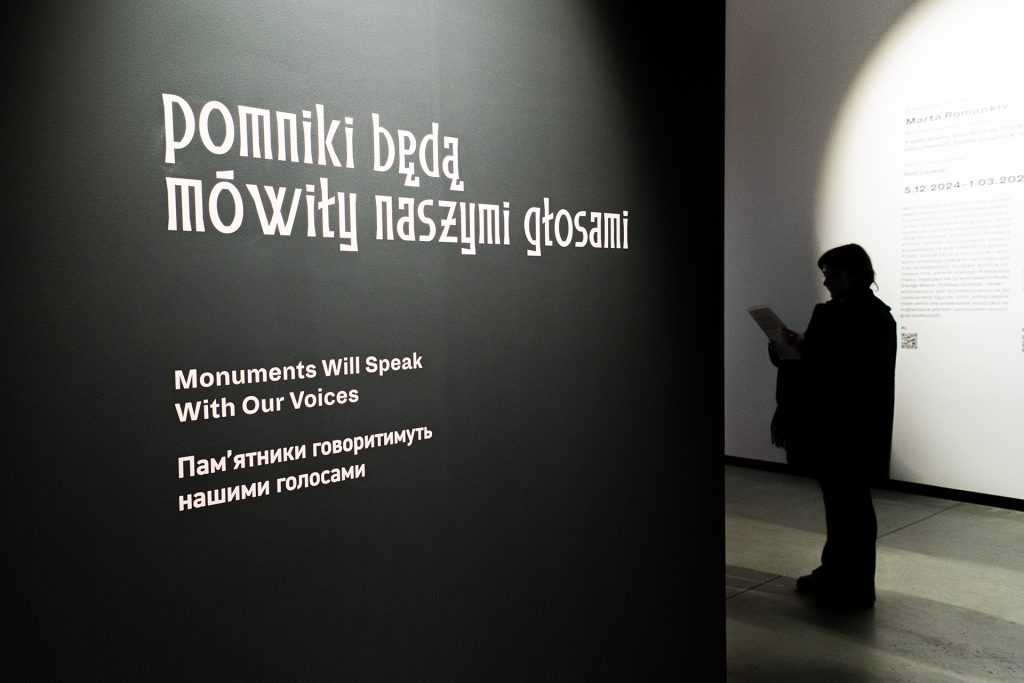
Marta Romankiv. Monuments Will Speak With Our Voices
Collaboration: Freddy Abadia, Alina Berdnyk, Tina Braharnyk, Ernesto Cardenas, Aliaksandr Danilkin, Alena Leo, Iuliia Litsevych, Sashko Ostapchuk, Vanessa Ruggiero
Curator: Piotr Lisowski
Coordinator: 66P Subiektywna Instytucja Kultury, księcia Witolda 66, Wrocław
Exhibition duration: 5.12.2024 – 1.03.2025
The project The Monuments Will Speak With Our Voices was carried out in collaboration with NOMADA – the Association for the Integration of Multicultural Society.
Can a monument, a form inherently designed to commemorate, speak about the future? Is it possible to deconstruct a monument and repurpose its symbolic capital to make it useful for building a community composed of diverse voices and experiences? In her project The Monuments Will Speak With Our Voices, Marta Romankiv initiated the process of creating a prototype tool that enables expression for groups that are often unheard, frequently marginalized minorities. The artist’s strategy involves orchestrating a situation that allows their voices to resonate.
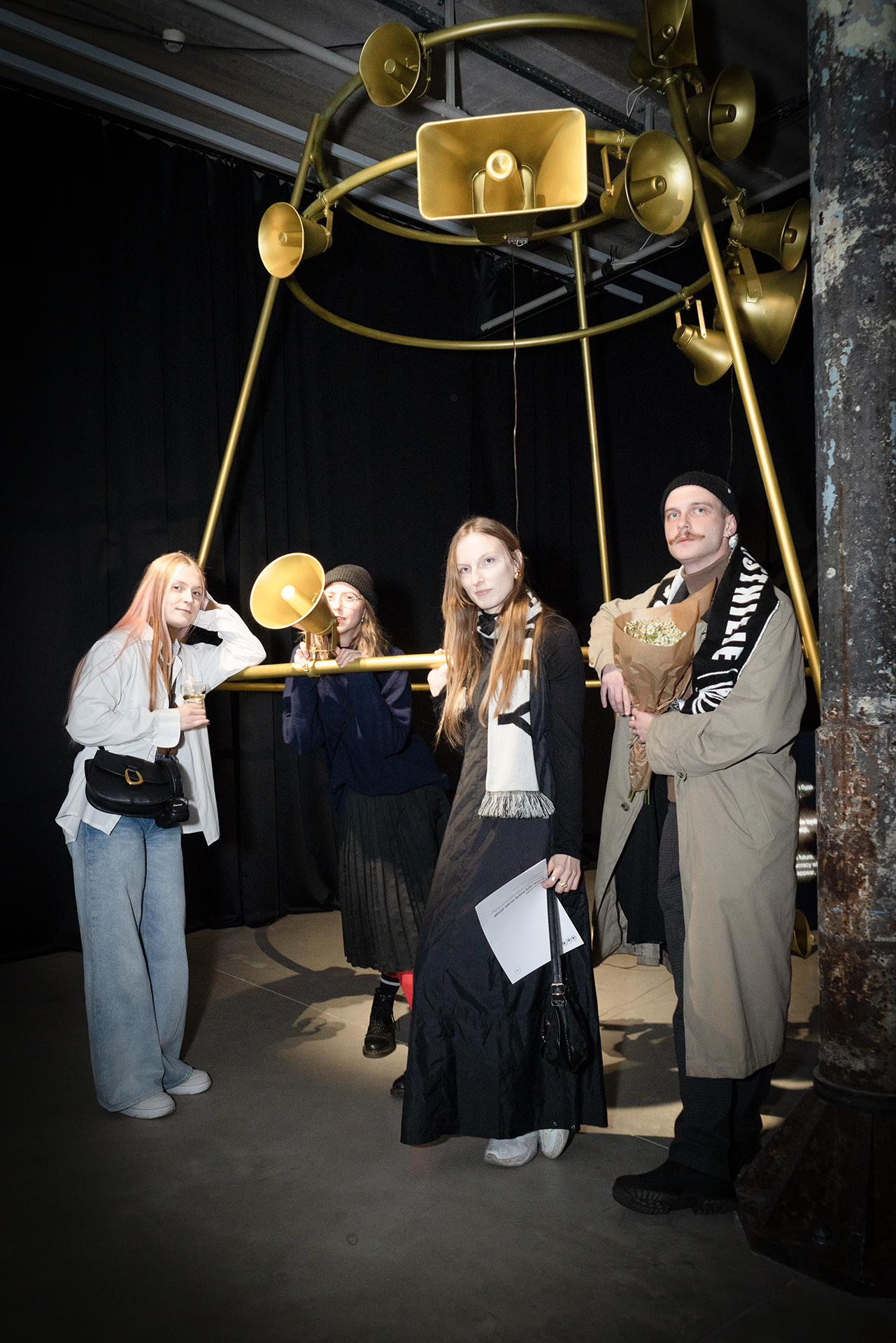
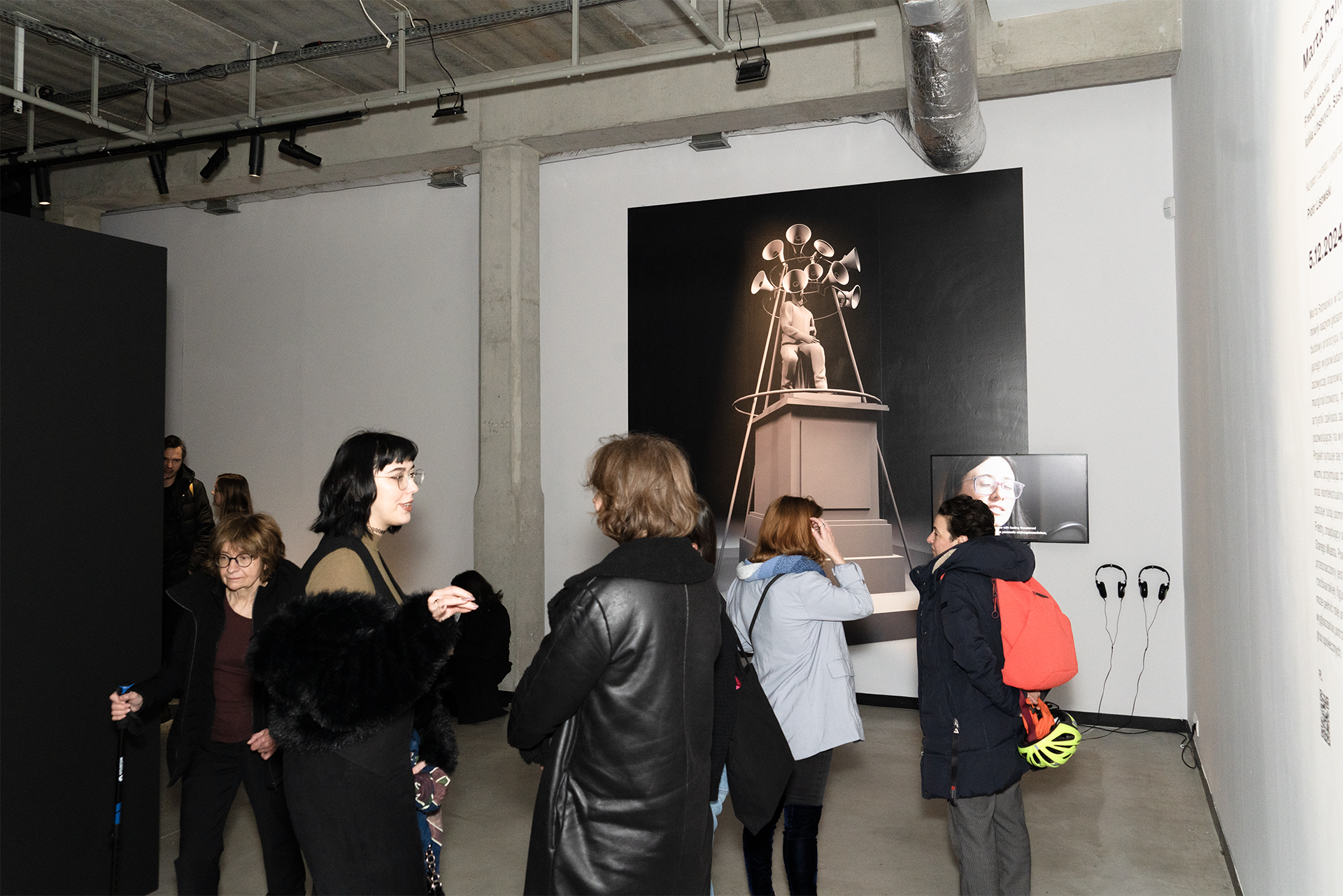
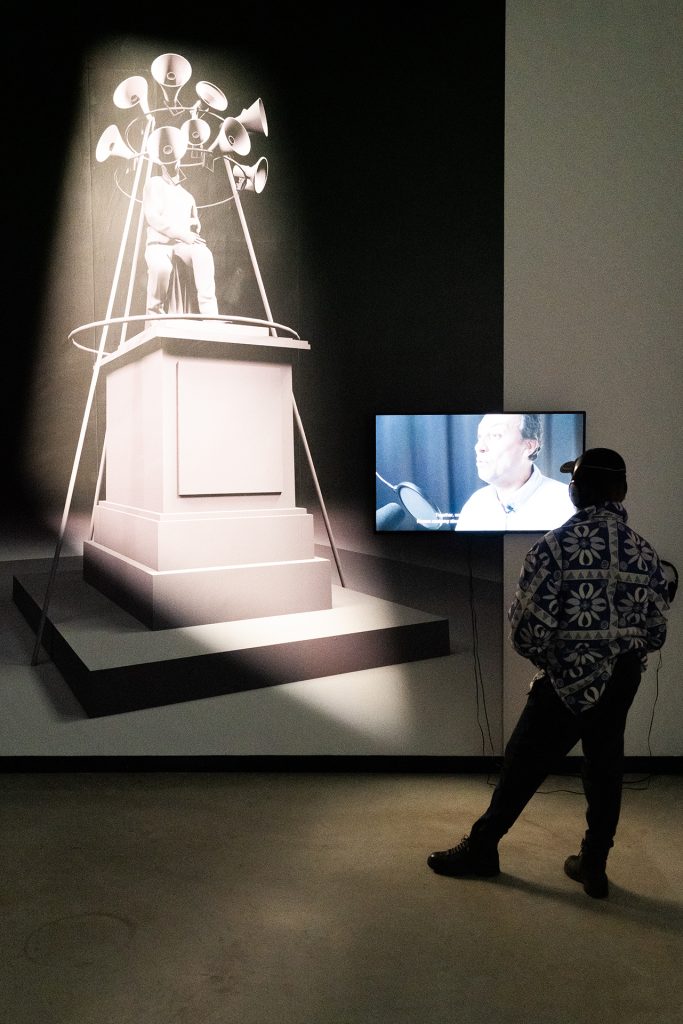
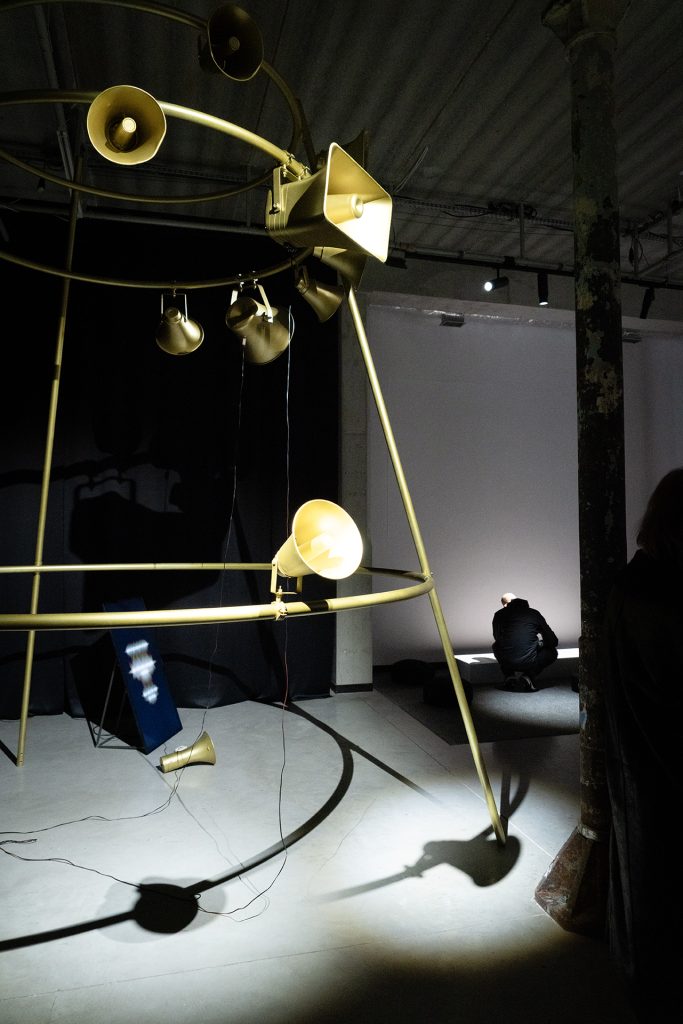
The project is positioned at the intersection of art and activism, adopting a participatory and contextual character. Its starting point is the monument of Count Aleksander Fredro, located in Wrocław’s Old Town Market Square. The resulting prototype—a physical object—is designed to be placed on this sculptural figure, while also serving as a universal structure for articulating the needs and demands of various social groups.
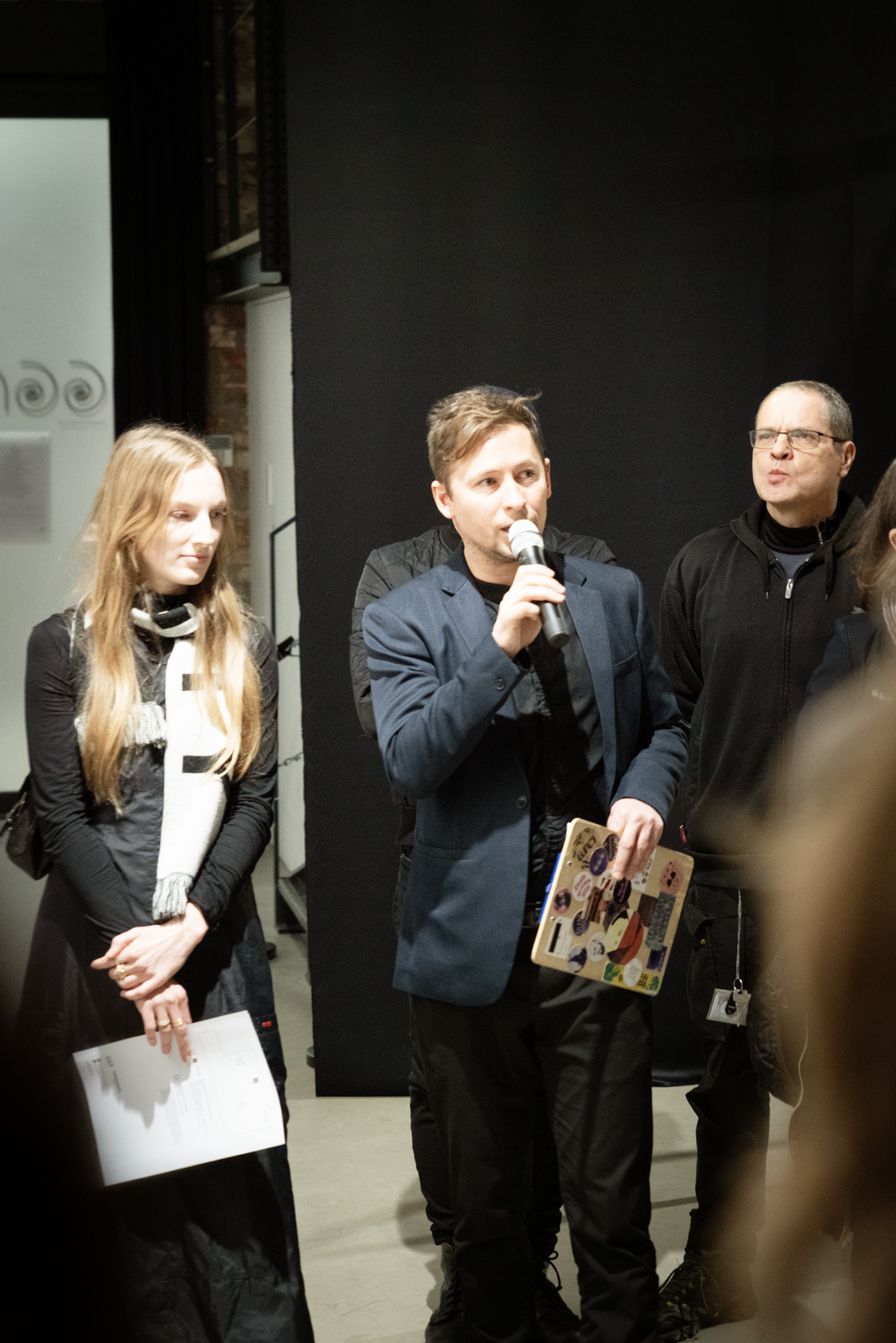
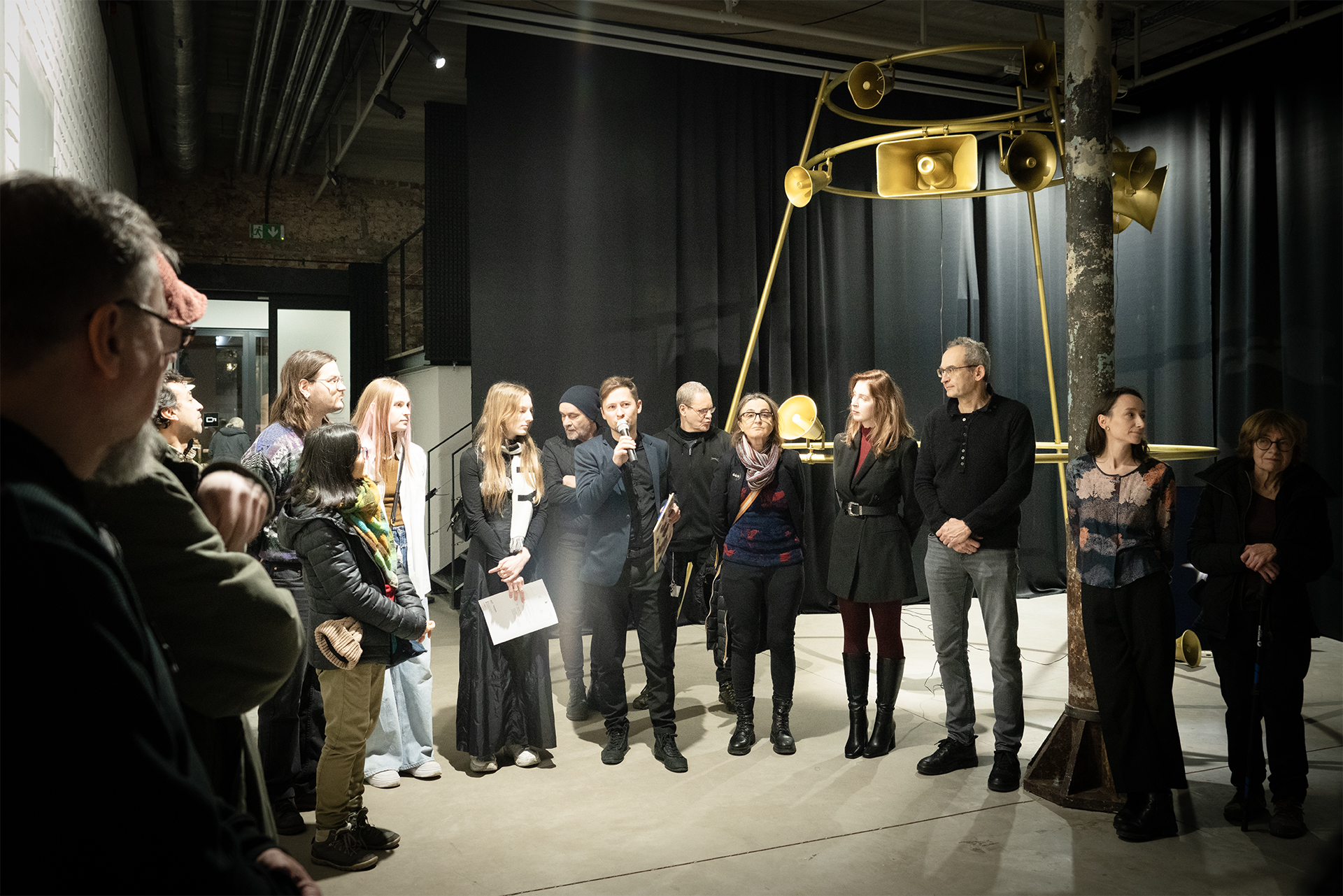
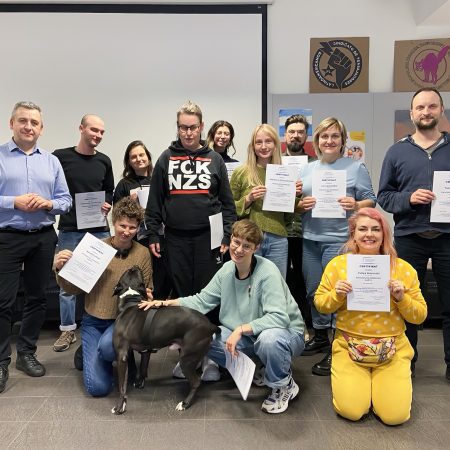
To bring the object to life for the first time, the artist invited a group of migrants from Ukraine, Belarus, and Colombia to collaborate. All of them had come to Wrocław to study, work, or simply live. During workshop meetings, the participants shared their experiences, discussing common challenges as well as envisioning potential future scenarios rooted in the idea of a heterogeneous society. The result was a unique audio piece—a multilingual voice shaped by the structure of a literary drama. Its content forms a collective manifesto emphasizing the need to reclaim rights and advocate for equality and justice.
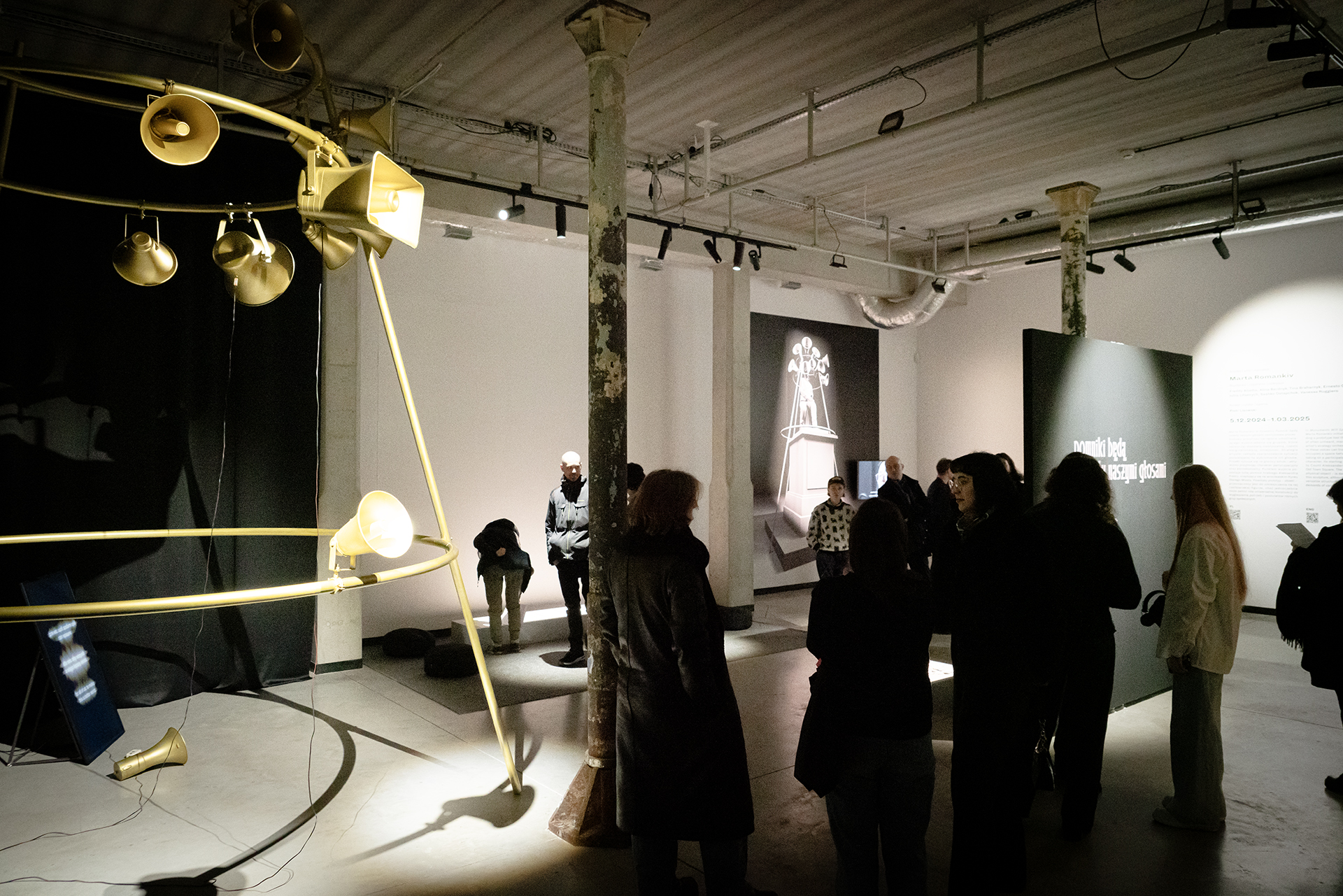
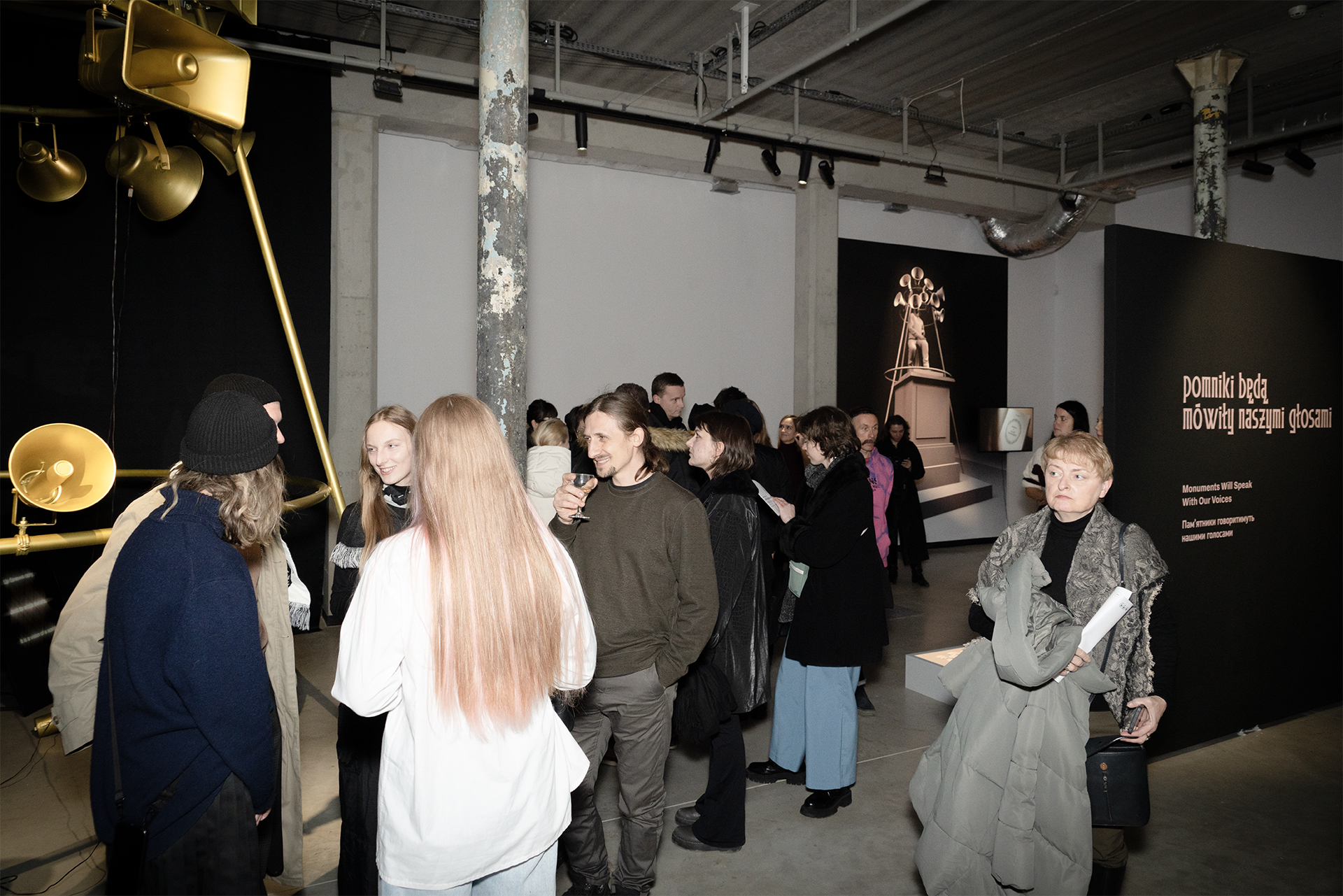
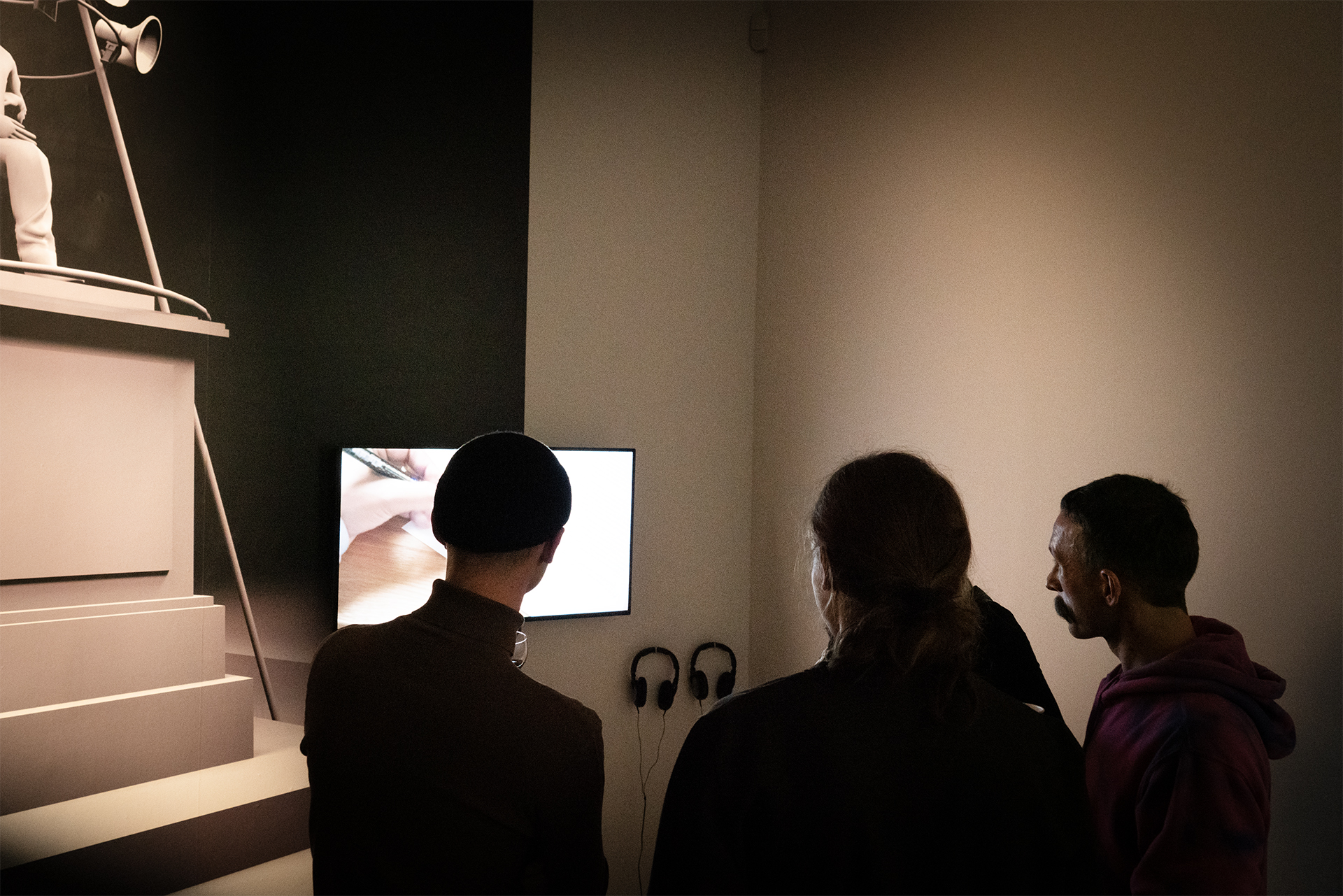
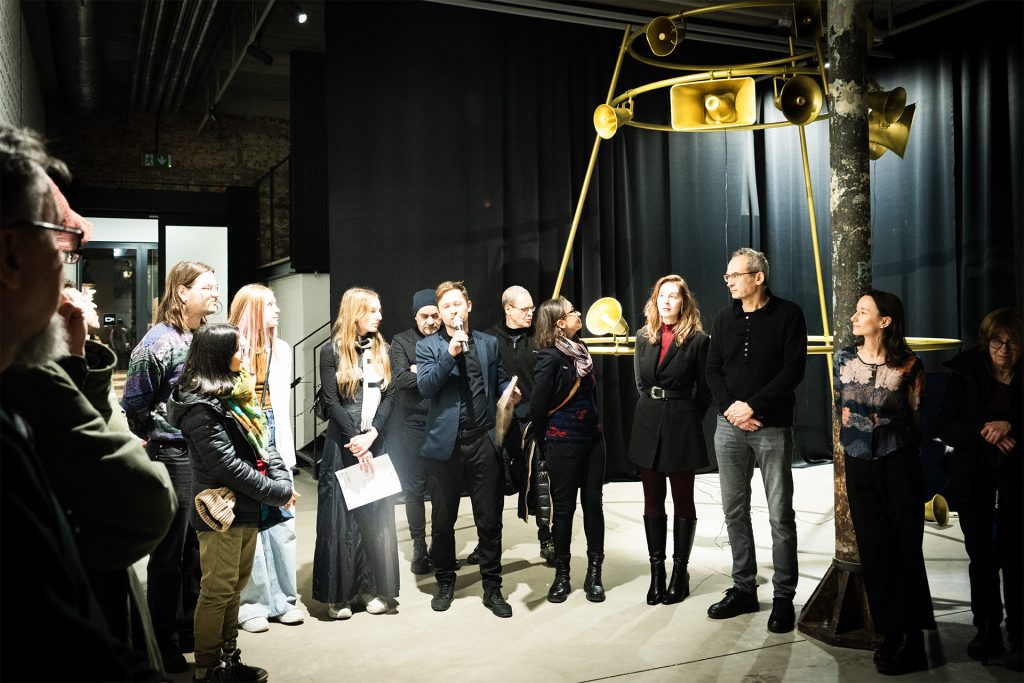
In the exhibition, Marta Romankiv presents both the documentation of the project’s development process and its result—a prototype that envisions a future where the voices of migrants resonate on every street and square, making them impossible to ignore. The artist deliberately incorporates the Fredro monument, which itself underwent a “migration” from Lviv to the capital of Lower Silesia. Transferred in 1956 from the city where Marta was born, the sculpture followed a path shared by displaced Polish communities from Lviv and many contemporary migrants.
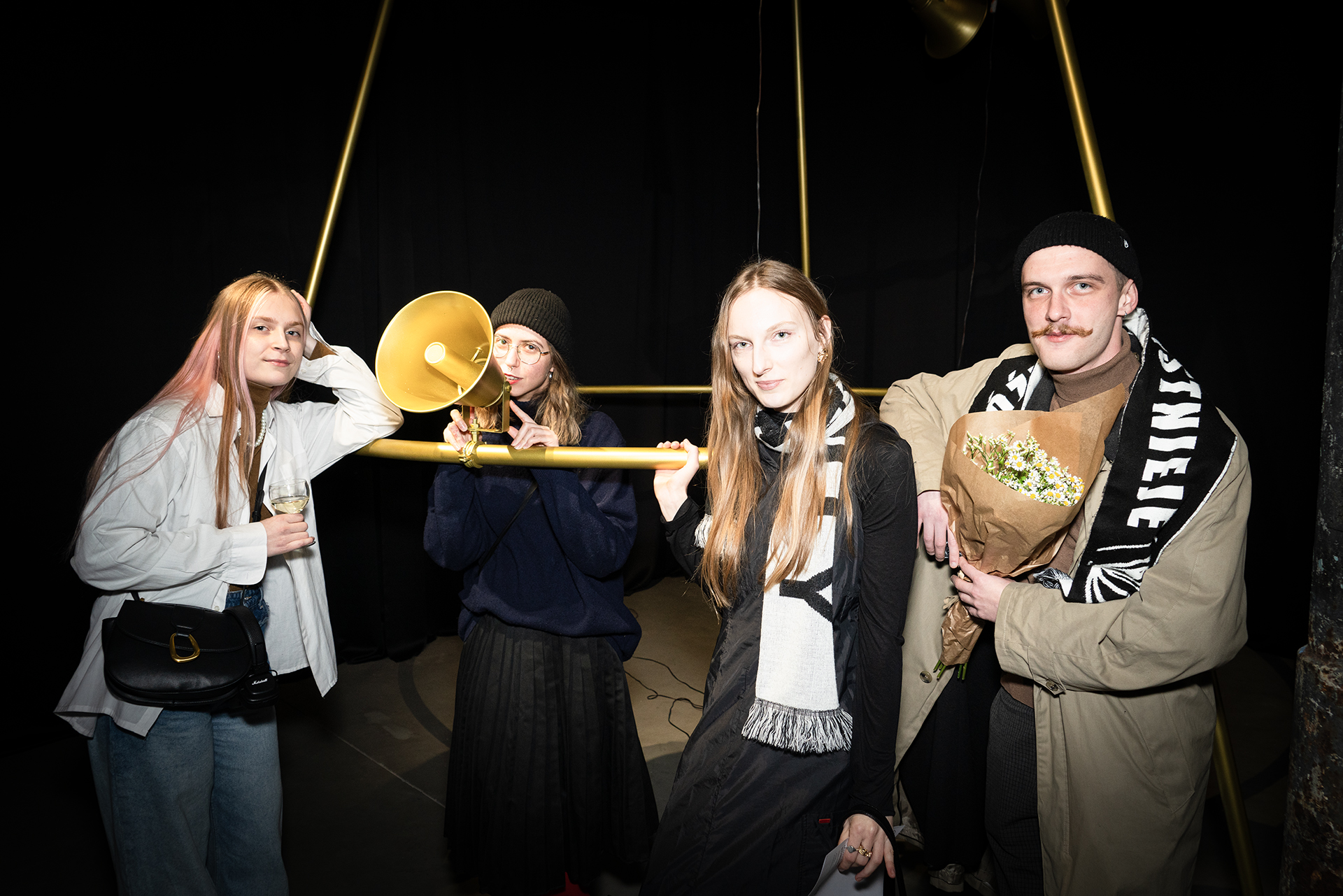
The steel structure of the prototype, designed and adapted to fit the dimensions of this “migrant monument,” symbolically becomes a platform for voices that are underrepresented in public spaces, voices that seek a rightful place within the social fabric.
A monument, as an artistic form, is typically erected to commemorate a specific person or historical event. The narratives surrounding such representations often fall prey to historical relativism, subject to changes in social, political, religious, or cultural contexts. In discussions about monuments, issues related to public space and urban planning remain crucial. A monument can be an expression of emancipation, but at the same time, it can be a symbol of usurpation, hierarchical narrative, or political manipulation. Some monuments are demolished, while others attract spontaneous cults. It can also become an exclusionary tool, commemorating a particular individual while simultaneously symbolizing the omission of many others who played an important role in elevating the figure being commemorated.
Marta Romankiv, in her work, views the monument motif as a forum—a place for meetings, cultural events, social protests, and the expression of opinions by a variety of groups. Can statues standing in the central squares of cities help shape a new, more inclusive communal future? The artist’s prototype is an attempt to create an object designed for public space, serving as an open platform that fosters communal social dialogue. Its primary goal is to draw attention to the need to ensure equal opportunities for people and counteract social exclusion. The idea behind it is to raise awareness of the issue and create a democratic tool for “speaking” and “commemorating.” Marta Romankiv’s action can be seen as a social experiment—handing over a platform to communities to explore its potential usefulness.